
Kick START Your Day: A Smarter Approach to Morning Meeting
Walk into many classrooms early in the morning and you’ll see the same scene.
Lights off.
Students on computers.
Minimal interaction.
Everyone slowly “waking up.”
And then we wonder why the first hour of the day feels sluggish, and often continues throughout the entire day.
Having worked in hundreds of classrooms, we believe something simple but powerful:
How you start your day often determines how you end your day.
Morning meeting should not be filler time.
It should not be something that drifts for 20–30 minutes.
And it certainly shouldn’t delay instruction.
Instead, we believe morning meeting should function like a coach’s pre-game huddle.
Think about it. Before a team walks onto the field, the coach gathers them together. They get focused. They get energized. They review the plan. They remind each other what success looks like.
That’s exactly what a strong morning meeting should do for students.
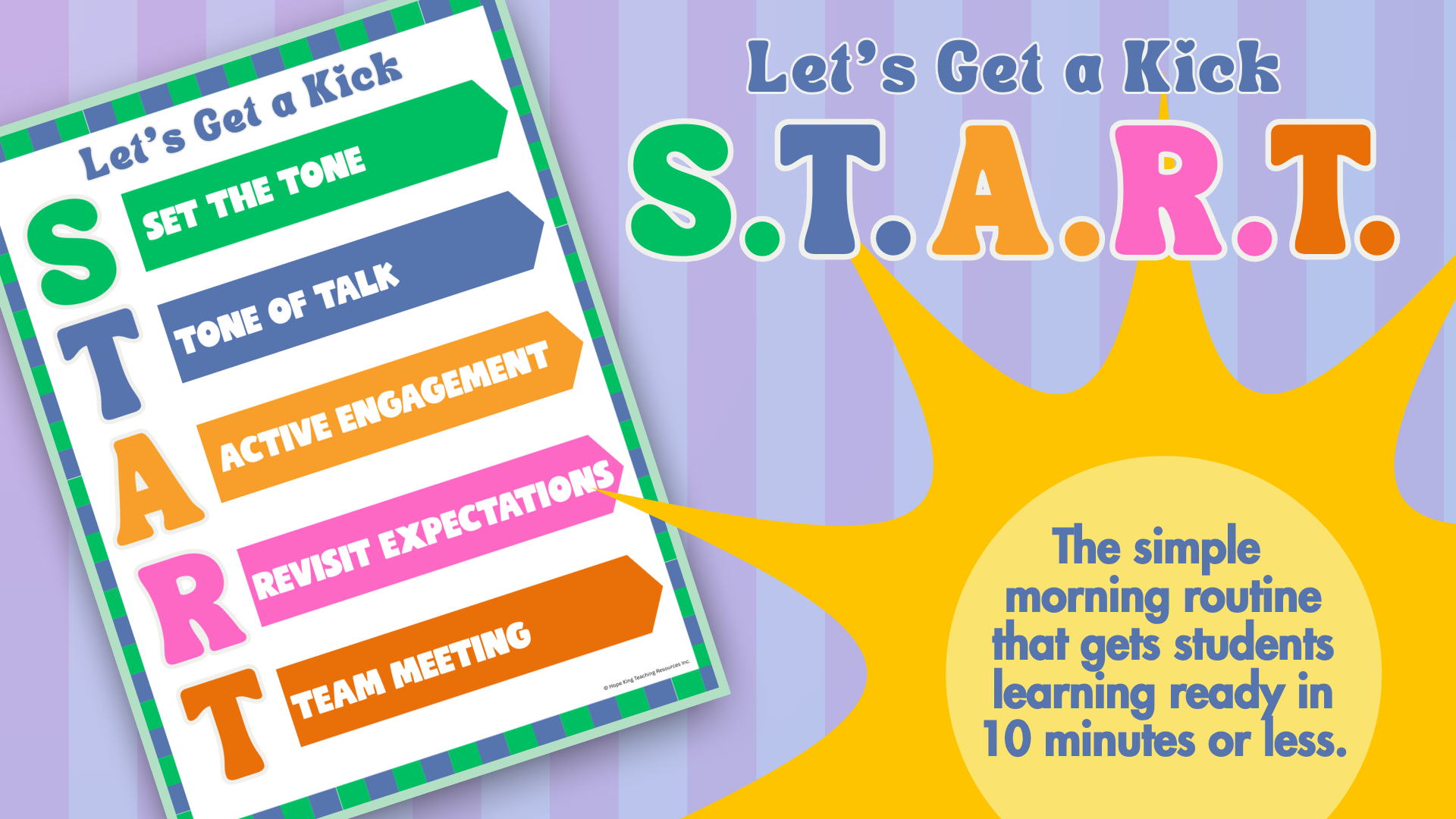
We call our approach Kick START — a quick, intentional routine that takes 5–7 minutes before instruction begins and gets students mentally ready to learn.
Because every day in the classroom is game day.
The Kick START Framework
S — Set the Tone
The tone of your classroom begins the moment students walk through the door.
Yet many classrooms unintentionally create an environment that feels sleepy instead of energized. Dark rooms, quiet spaces, students immediately sitting on devices before 7:30 a.m. These small choices communicate a message whether we realize it or not.
If we want students to be learning ready, the environment has to reflect that.
Simple shifts can make a huge difference:
• Lights on
• Curtains open when possible
• Music playing as students arrive
• Teachers greeting students at the door
Music, in particular, plays a powerful role in setting the atmosphere of a room. Research shows that music can influence mood, increase alertness, and create a shared emotional space for a group of people. In a classroom, it can immediately shift the feeling from quiet and disconnected to welcoming and energized.
But one of the most powerful tone-setters is the teacher.
Greeting students at the door is one of the simplest, highest-impact routines you can build. A quick moment of connection signals to students that they are seen and valued.
“Good morning, Jordan! I’m glad you’re here.”
“Good morning, Ava. Today is going to be a great day.”
These interactions take seconds, but they build relationships and set expectations for the day ahead.
Tone is not accidental. It’s intentional. And it requires habit, and consistency.
T — Tone of Talk
What we say matters.
But how we say it matters just as much.
Teachers make thousands of micro-interactions every day. In those moments, our tone can either escalate a situation or calm it down. It can create stress or create safety.
Students are constantly reading adult tone for signals (even our posture):
Are we rushed?
Are we frustrated?
Are we calm and confident?
A steady, positive tone communicates stability. It helps regulate the room.
This does not mean we have to sound overly cheerful or performative. It simply means being aware that our voice carries weight. When students feel the emotional temperature of the classroom is calm and supportive, they are far more likely to settle into learning mode.
Morning meeting is a powerful time to establish that tone for the entire day.
A — Active Engagement Activity
One pattern I notice again and again when observing classrooms and even in my own classroom, is how the day begins academically.
Students walk in and are immediately expected to start writing.
Or complete math problems.
Or begin independent work.
Some students dive right in.
Others check out.
And some students quickly show behaviors simply to avoid the task.
Why? Because the first task of the day may be tied to the area where they struggle most.
When students feel they cannot access the content, behavior often becomes the escape.
Instead of starting the day with immediate academic pressure, I prefer beginning with a short, simplified morning choice.
This is sometimes called a soft start.
Students choose from a small set of options that help wake up their brains while interacting with classmates. These activities should be easy to manage and require minimal materials.
Examples of simple morning choices include:
• Partner trivia questions
• Would You Rather discussions
• Building challenges with simple manipulatives
• Quick drawing prompts
• Conversation cards
• Brain teaser puzzles
• Tabletop games
• Collaborative riddles
The goal is not elaborate centers or complicated setups.
The goal is movement, conversation, and engagement.
And the research is clear: powerful learning can happen through play at any age level. When students start the day socially engaged and mentally activated, the transition into academic learning becomes significantly smoother.
R — Revisit Expectations
After the engagement activity, it’s time to gather students together.
This is when I bring everyone to the carpet or meeting space and revisit what learning ready looks like. Not because students have never heard the expectations before, but because clarity must be consistent and visible if we want it to actually stick.
One of the biggest mistakes we make in classrooms is assuming students know what we mean when we say things like:
“Be respectful.”
“Pay attention.”
“Participate.”
Those words sound clear to adults, but they are incredibly vague for students. What does respectful actually look like? What does participation sound like? What does being focused feel like?
When we take a moment in the morning to clearly revisit expectations, we move from reactive management to proactive clarity.
Instead of correcting behaviors all day long, we set students up with a clear picture of success before instruction even begins.
I like to frame this around success criteria for learning behaviors. Not just what we are learning that day, but how we will show up as learners.
But here is an important part that often gets missed.
Expectations should be visible and measurable.
Students should be able to see them, understand them, and know exactly how they will demonstrate them. If a student cannot clearly picture what the expectation looks like, it becomes nearly impossible for them to meet it consistently.
Instead of vague language like “be respectful,” we want expectations that students can actually measure themselves against.
For example:
Today our success criteria might be:
• Eyes on the speaker during discussions
• Building on someone else’s thinking by saying “I agree with…” or “I want to add…”
• Trying two strategies before asking for help
Those are behaviors students can see, hear, and practice.
But here’s the key.
Don’t just say it.
Model it.
Show it.
Practice it.
Quickly demonstrate what it looks like and what it does not look like.
You might say:
“Let me show you what active listening looks like.”
Then model it.
“Now let me show you what it does NOT look like.”
Students laugh, they recognize the difference, and suddenly the expectation becomes clear.
Sometimes I even have a student volunteer model it with me. That quick moment of practice gives students a concrete example they can refer back to throughout the day.
Now, this does not mean we need to reteach every rule or expectation every single morning. That would be unnecessary and would quickly lose its impact.
Instead, this is where teachers use their awareness of the classroom to target patterns or trends they are beginning to notice.
Maybe transitions have been getting sloppy.
Maybe discussion norms are slipping.
Maybe students are rushing through their work without checking it.
Morning meeting becomes the perfect time to address those small issues before they turn into ongoing low-level behaviors that disrupt learning throughout the day.
Think of it like a quick course correction.
You are simply saying:
“Here’s something we’re going to focus on today.”
That proactive reminder often prevents dozens of corrections later.
When expectations are visible, measurable, modeled, practiced, and targeted toward real classroom patterns, behavior becomes far less about discipline and far more about alignment.
And that shift alone can change the entire flow of a classroom.
T — Team Meeting
Finally, we bring it all together with a quick team meeting.
This is the moment where the classroom becomes a team preparing for the day ahead.
There are many ways to structure this part. Some teachers keep the same routine daily, while others rotate elements to keep it fresh.
Some quick ideas include:
• Quote of the day
• Joke of the day
• Would You Rather question
• A quick challenge or brain teaser
• A short team-building moment
But the most important piece is this:
Preview the day and set the goal.
I often explain the plan for the day like a coach talking to players before they head onto the court.
“Here’s what our game plan looks like today…”
“We have two big learning goals…”
“I know this group can handle a challenge…”
When students feel like they are part of a team with a shared mission, engagement changes.
Energy changes.
Ownership changes.
Every Day Is Game Day
Morning meeting does not need to be long to be powerful.
In fact, when it is intentional and focused, five to seven minutes is enough to set the entire trajectory of the day.
Kick START helps teachers:
• Create an energized classroom environment
• Build positive relationships with students
• Reduce early-morning behavior challenges
• Prepare students mentally for learning
• Align the class around shared expectations and goals
Because at the end of the day, teaching really is a lot like coaching.
You gather your team.
You set the tone.
You review the plan.
And then you send them out ready to perform.
And when the start is strong, the rest of the day has a much better chance of following suit.
You can download the free Kick START How-To Guide HERE!
Keep going teachers! You’re doing amazing!
Hope
