
It’s Not the Content Wearing You Out — It’s Everything Around It
Middle School Isn’t Hard Because of the Standards
Let’s just say it.
The standards aren’t what make middle school hard.
Most middle school teachers know their content. You can teach the lesson. You can break down the skill. You can model the strategy clearly.
That’s not the exhausting part.
What makes middle school hard is everything happening around the content.
It’s teaching while navigating social drama.
It’s asking for focus when emotions are running high.
It’s pushing for rigor while confidence is fragile.
It’s expecting independence from students who are still figuring out who they are.
You’re not just delivering instruction.
You’re managing identity, attention, motivation, and behavior — all at the same time.
The Lesson Isn’t the Problem
You can plan a strong lesson.
You know where students will struggle.
You know how to scaffold it.
You know how to explain it differently if you need to.
But the second the room feels off, the lesson takes a hit.
One comment from a peer and a student shuts down.
One mistake and someone decides they’re “bad at this.”
One distraction and half the class is gone mentally.
You’re constantly pulling everyone back to center.
Not because you’re unprepared.
Because middle school is loud — emotionally, socially, developmentally.
They Can Do It… Until It Feels Uncomfortable
This is the part that wears on you.
They can answer when it’s guided.
They can do it when you’re standing next to them.
They can explain it when the risk feels low.
But when it feels public?
When it feels hard?
When it feels like they might get it wrong?
They check out.
They joke.
They deflect.
They say they don’t care.
They ask to go to the bathroom.
It’s not always defiance.
Sometimes it’s pride.
Sometimes it’s fear.
Sometimes it’s “I don’t want to look dumb in front of my friends.”
That layer changes how you teach.
Why It Feels So Heavy
You’re not just teaching standards.
You’re constantly:
Resetting the tone.
Protecting kids from embarrassment.
Building confidence.
Rebuilding focus.
Trying to hold high expectations without losing the room.
And you’re doing it six or seven periods a day.
That’s why middle school feels draining.
Not because the content is impossible.
Because the emotional load is constant.
The Shift Isn’t More Content
Middle school doesn’t need another way to explain the standard.
You don’t need more slides.
You don’t need more worksheets.
You don’t need louder energy.
You need systems around the content.
Clear routines that make the room feel steady.
Engagement structures that lower the risk of participation.
Ways to build productive struggle without triggering shutdown.
Behavior systems that support regulation instead of escalating it.
When those are in place, rigor doesn’t feel overwhelming.
It feels manageable.
That’s Why the Middle School Track Is Different
This track is not about your content.
You already know your content.
It’s about everything happening around it.
It’s about giving you practical strategies for:
Engagement in rooms that feel restless.
Building resilience in students who shut down fast.
Creating structure that reduces chaos instead of reacting to it.
Strengthening Tier I so rigor doesn’t trigger resistance.
You’ll see what it looks like.
You’ll see how it plays out with real students.
You’ll walk away with systems you can actually implement.
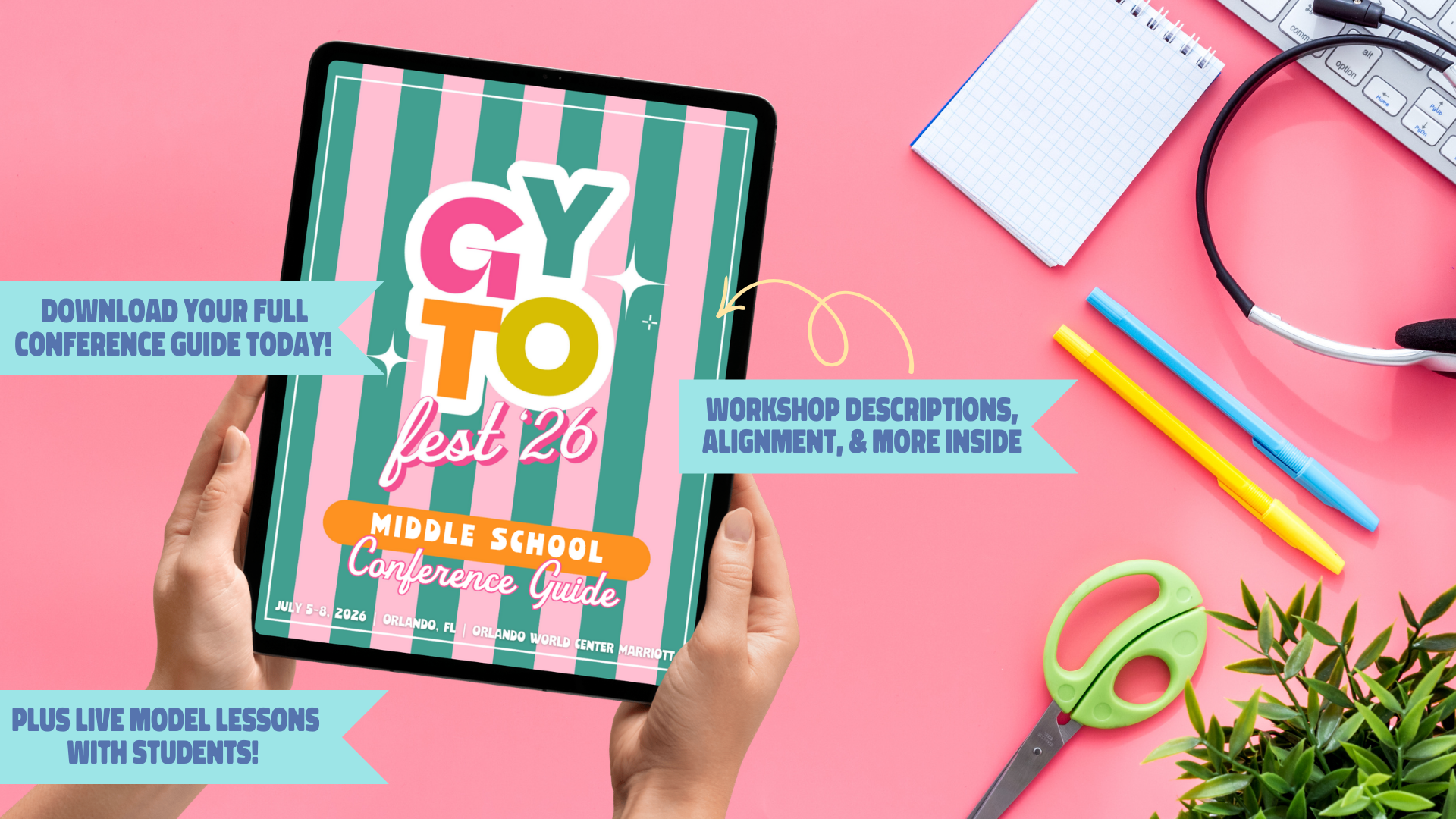
If you’re reading this thinking, “Yes. This is my room,” then take a few minutes to explore the full Middle School Conference Guide.
Inside, you’ll see every workshop, every live model lesson, and exactly how the experience is structured — so you can decide if this is the kind of support you’ve been needing.
Because middle school doesn’t need more theory.
It needs real systems that make teaching sustainable again.
You don’t need help teaching the standard.
You need support teaching middle school.
And that’s exactly what this track is built for.
