
Kindergarten Students Are Coming in Behind | Here’s How to Differentiate
Kindergarten Has Changed…And Most Classrooms Were Not Built for What’s Walking Through the Door
Talk to any kindergarten teacher right now and you’ll hear the same thing:
“They’re coming in further behind.”
“They’ve never held a pencil.”
“They don’t know letters.”
“They struggle to sit.”
“The gaps are huge.”
Kindergarten is no longer what it used to be.
Students are entering classrooms with a wider range of readiness than ever before. Some are reading. Some don’t recognize their name. Some can regulate emotions. Some are still learning how to function in a group setting.
And teachers are expected to meet all of them.
At the same time.
In one classroom.
The Biggest Struggle Kindergarten Teachers Told Us
Before we built the Kindergarten track, we asked.
We surveyed teachers.
We listened.
We paid attention to what they said they needed most.
The answer was clear:
Differentiation.
Small groups.
Managing wide gaps.
Kindergarten teachers are not asking for more worksheets.
They are asking:
How do I meet the needs of 30 students at completely different levels?
What exactly should I be doing in my small group?
What is the rest of the class doing while I’m meeting?
How do I keep this simple and organized instead of chaotic?
That is the tension in kindergarten classrooms right now.
The Reality of Small Group Instruction in Kindergarten
Most teachers know small groups are important.
But here’s where the stress lives:
You pull 6–8 students to your table.
Now what?
Is the instruction targeted?
Is it systematic?
Are the other 20+ students truly engaged?
Is it manageable long term?
Without clarity, small groups become:
Rotations without purpose.
Centers without structure.
Noise without learning.
Kindergarten teachers do not need more complexity.
They need clarity and systems.
Differentiation When the Gaps Are Wide
Differentiation in kindergarten isn’t just adjusting a worksheet.
It is responding in real time to:
• Students who don’t know letter sounds
• Students blending CVC words
• Students reading simple text
• Students who still need phonemic awareness
• Students who need language development
That range is real.
And without intentional systems, teachers end up stretched thin trying to serve everyone.
That Is Why We Built the Kindergarten Track
This track was designed around the exact struggles teachers voiced.
Not assumptions.
Not trends.
Real classroom realities.
You will learn how to:
• Build simple, manageable differentiation systems
• Structure purposeful small groups
• Know exactly what to teach at your table
• Keep the rest of your class meaningfully engaged
• Simplify your classroom systems without lowering rigor
Because differentiation should feel organized — not overwhelming.
See It In Action — The Whole Room
You will not just hear about small groups.
You will see them.
You will watch:
An entire kindergarten class of 30 students in action.
Not just 6–8 at a table.
You will see:
What the teacher is doing in small group
What the rest of the class is doing
How systems are structured
How transitions are managed
How it stays simple and intentional
Because one of the biggest questions kindergarten teachers ask is:
“What is everyone else doing while I’m meeting?”
You will leave with that answer.
Kindergarten Deserves Systems That Work
Kindergarten teachers are doing some of the most foundational work in education.
They are building:
Reading foundations
Math foundations
Social foundations
Emotional foundations
And they are doing it with students who are arriving with wider gaps than ever before.
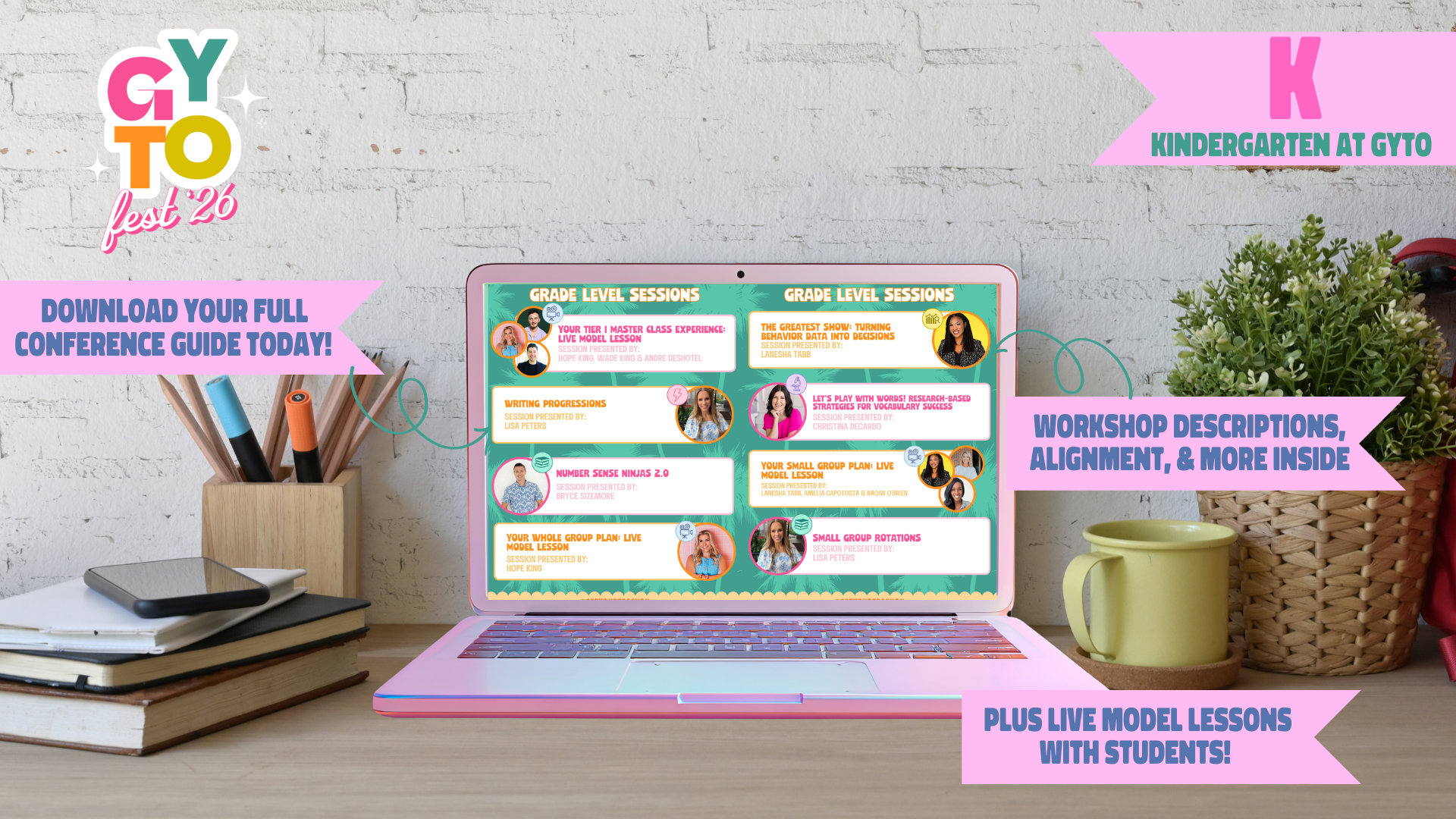
If you are ready to simplify differentiation, strengthen small groups, and see organized systems in action, explore the full Kindergarten Conference Guide.
Because kindergarten has changed.
And your support should match the complexity of the classroom in front of you.
