
Can We Talk About the Jump Between Second and Third?
The Pressure No One Says Out Loud
Second grade teachers feel something that is hard to name.
It is not that your year matters more. Every year matters. But there is a very real shift that happens between second and third grade, and you feel responsible for preparing students for it. You know what is coming. You know expectations increase. You know independence becomes non-negotiable.
Even if no one says it directly, you carry that weight.
You find yourself wondering if they are fluent enough. If they can sustain attention long enough. If they can manage longer texts and multi-step math problems without constant support. If they are truly ready.
Second grade becomes the bridge. And bridges carry weight.
When Whole Group Looks Fine… But Independence Falls Apart
During instruction, things can feel solid.
Students nod. They respond. They participate. They seem to understand.
Then you release them to work independently.
And suddenly everything shifts.
Hands go up. Behavior creeps in. Work slows down. Confidence dips.
You think, “I literally just taught this.”
That moment is frustrating because it feels like a motivation issue. But most of the time, it is not.
It is an independence issue.
And independence does not grow just because instruction happened.
It has to be intentionally built.
The In-Between Year
Second graders are in a very specific developmental space.
They are not beginners anymore. But they are not fully independent either.
Fluency is developing, but not always automatic. Writing is improving, but stamina is inconsistent. In math, they can follow a structure, but reasoning can break down when the format changes. Behavior is better than in earlier grades, but academic demand can quickly expose gaps in regulation and focus.
This is the year where support cannot disappear — but ownership must grow.
That tension is real.
Independence Requires Alignment
Here is what often makes this year feel so heavy.
When engagement is inconsistent, students drift the moment they are on their own. When Tier I instruction is unclear, students are unsure what mastery really looks like. When behavior systems are reactive instead of proactive, instructional time disappears. When small groups are not tightly aligned to actual gaps, independence does not strengthen.
Everything starts to feel like spinning plates.
Teachers work harder. Students try harder.
But growth does not always match the effort.
What second grade needs is not more ideas.
It needs alignment.
Engagement that keeps thinking high.
Tier I practices that remove ambiguity.
Behavior systems that protect learning time.
Small groups that intentionally close gaps.
When those pieces work together, independence grows naturally instead of feeling forced.
Why This Year Matters So Much
The shift to third grade is not just about harder content. It is about increased cognitive demand and sustained independence.
Students are expected to read longer texts without scaffolds. To explain reasoning clearly in math. To write with structure and stamina. To manage transitions and expectations with less prompting.
If independence is fragile in second grade, that shift feels overwhelming.
If independence is strong, that shift feels manageable.
That is why this year matters.
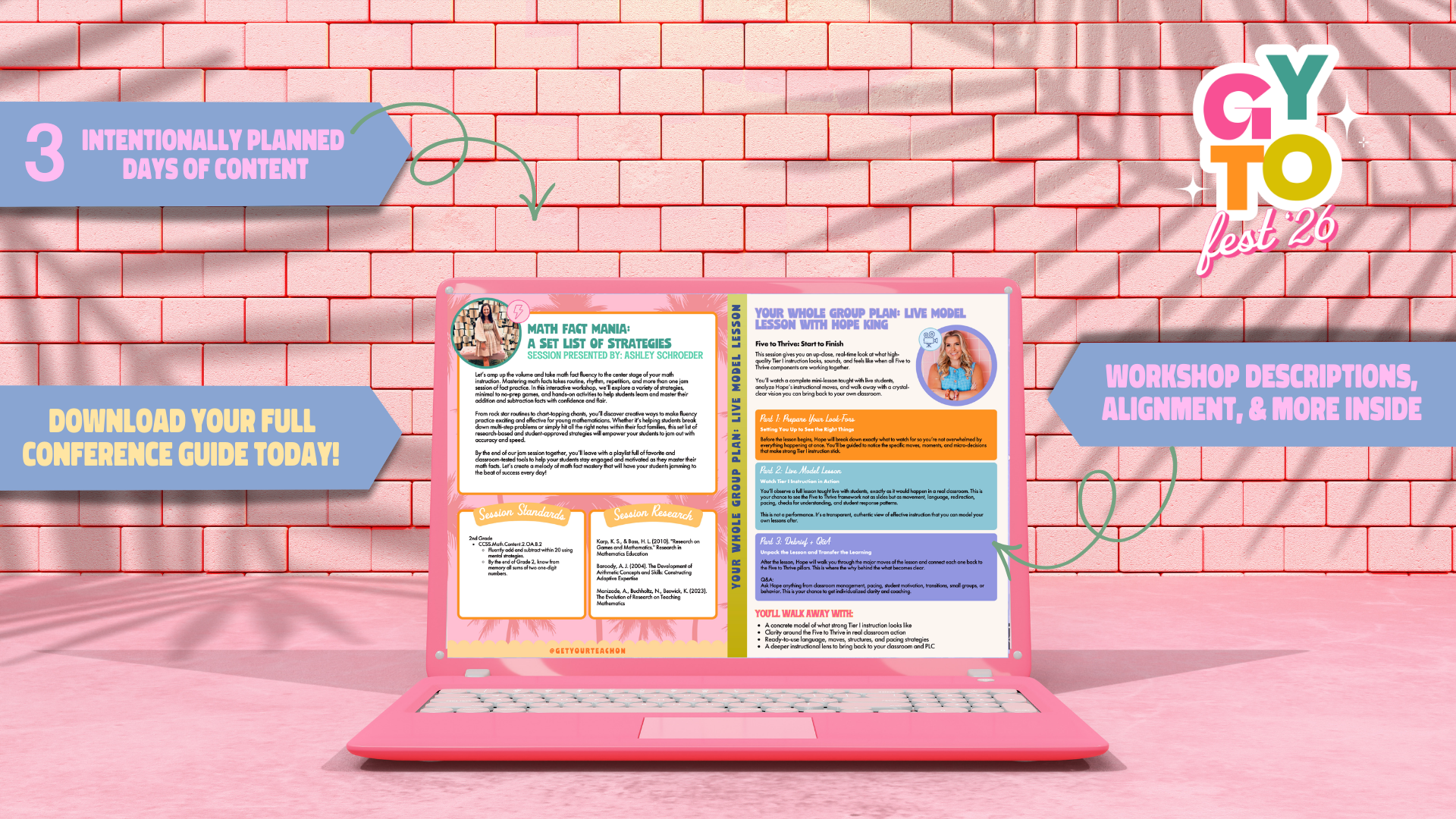
That Is Why We Built This Track
We built this experience around the real pressure second grade teachers feel.
Not around adding more to your plate, but around simplifying it.
You will focus on strengthening student engagement so thinking stays active. You will sharpen Tier I practices so expectations are clearer and more consistent. You will refine behavior systems so independence does not unravel the classroom. You will structure small groups in a way that actually accelerates readiness for what comes next.
And you will see it in action.
Because the jump between second and third is real.
When second grade is aligned, that jump does not feel like a cliff.
It feels like a step.
